
The Ultimate Pole Dancing Outfit Guide: What to Wear for Grip, Safety, and Style in 2026
If you think wearing full-length leggings to your first class will protect your skin from bruises, you are actually setting yourself up for a dangerous fall. It sounds backwards, but in vertical fitness, your skin acts as your primary brake system. Most new students feel a surge of anxiety about showing skin in a public studio, especially when 74% of beginners report feeling self-conscious during their first thirty days of training. You want to feel secure and covered, yet you also need to stay glued to the chrome to stay safe.
It is a tricky balance to strike, but we are here to help you find it. This guide ensures you select a pole dancing outfit that maximizes your safety without forcing you outside your comfort zone or draining your bank account. We will explore the physics of skin friction, compare the top four grip-enhancing fabrics for 2026, and provide a concrete checklist for your first Laptastic lesson so you don’t waste a single pound on specialized gear you don’t actually need.
Key Takeaways
- Understand the critical physics of skin-to-metal friction to ensure your clothing never becomes a safety hazard during climbs or inversions.
- Learn how to choose the ideal pole dancing outfit by balancing high-performance support with the specific skin exposure needed for maximum grip.
- Identify the essential fabric features, such as 4-way stretch and moisture-wicking technology, that allow for full range of motion while staying dry.
- Determine whether your current DIY gear or swimwear is safe for a trial lesson or if you need to invest in professional-grade pole wear.
- Discover how to field-test your new kit in a professional studio setting to gain confidence and safety before attempting advanced maneuvers.
The Physics of Grip: Why Your Pole Dancing Outfit Matters
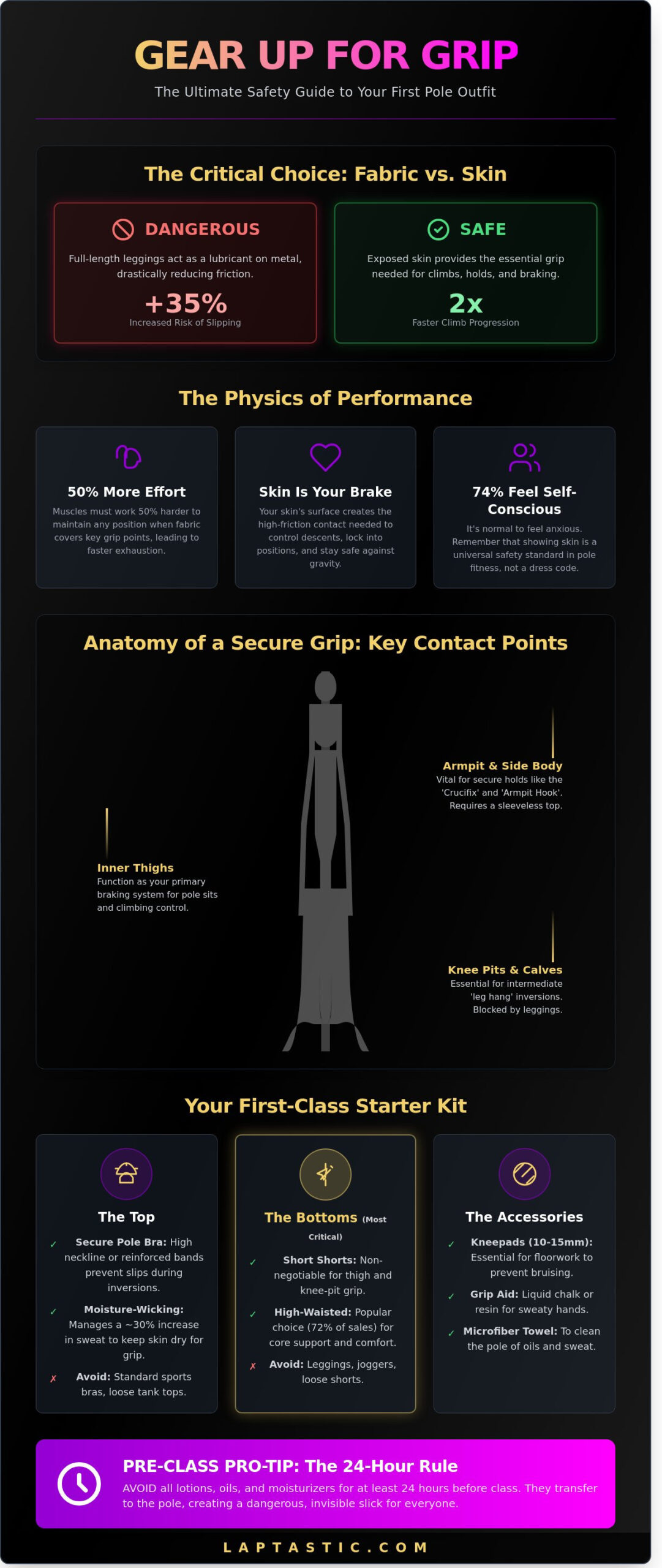
Gravity is your primary opponent in a pole studio. You need friction to stay off the floor. Fabric acts as a lubricant against metal, which makes most traditional gym clothes a safety hazard. This explains why a functional pole dancing outfit leaves plenty of skin exposed. Without this direct contact, your muscles have to work 50% harder to maintain any position, leading to faster exhaustion and potential slips.
Researching the history of pole dancing reveals how the sport evolved from Chinese pole and Mallakhamba into the modern fitness discipline we see today. Safety standards have remained consistent since the early 2000s. Skin grips metal; clothes slide. By 2024, specialized grip-wear brands increased their market share by 22%, yet traditionalists still prefer bare skin for maximum control. Between 2025 and 2026, experts predict a surge in high-tech breathable textiles designed to increase surface tension. Despite these innovations, the basic physics of skin contact remains the gold standard for student safety.
Intermediate moves demand specific grip points to prevent injury. If you wear full-length leggings, you lose the ability to use your knee pits or inner thighs for stability. This oversight increases the risk of slipping by approximately 35% during basic climbs. You’ll find that having more skin exposed actually makes the sport safer because it provides more points of contact to distribute your body weight.
Skin Contact Points Explained
Your inner thighs function as a primary braking system. Short shorts allow the dermis to lock against the metal, creating a stable pole sit. Side-body contact is just as vital for holds like the Crucifix. You also need sleeveless tops for the armpit hook. This move uses the friction of your ribs to support your body weight without overtaxing your forearm muscles.
Metal Types and Fabric Reactions
Studios typically install 45mm poles made of chrome or brass. Chrome is standard but gets slippery when cold. Brass offers higher natural friction but can cause pole burn on sensitive skin. You must avoid lotions for at least 24 hours before your session. These oils transfer to the metal and create a dangerous slick. Pole grip is the coefficient of friction between dermis and dance surface.
Selecting your first pole dancing outfit is a matter of physics rather than fashion. In a standard 60-minute class, students with 70% skin exposure usually master their first climb twice as fast as those in long pants. Bare skin provides the necessary traction to fight gravity effectively. When you choose the right gear, you aren’t just looking the part; you’re giving your body the technical tools it needs to succeed on the vertical bar.
The Essential Components of a Professional Pole Kit
Building a functional kit starts with your top. A standard sports bra often fails during inversions, leading to unwanted exposure. You need a specialized “Pole Bra” designed with high necklines or reinforced under-bands to keep everything secure while you’re upside down. Modern performance athletic fabrics help manage the 30% increase in sweat production typically seen during high-intensity climbs. These specialized textiles ensure your skin remains dry enough to maintain friction against the metal, which is the foundation of every move.
Your choice of shorts dictates your range of motion and grip points. High-waisted options currently account for 72% of sales in the 2024 pole wear market because they provide core compression and a flattering silhouette. Low-waisted shorts are better for advanced students who need side-body skin contact for complex moves like the human flag. Your pole dancing outfit must prioritize skin exposure on the thighs to ensure you don’t slip during a climb. Without that direct contact, gravity will win every time.
Kneepads are the non-negotiable accessory for any class involving floorwork. Choose pads with 10mm to 15mm of foam density to protect your patella during slides and transitions. Statistics from 2023 studio surveys suggest that 85% of minor bruising occurs during the first three weeks of floorwork training. Investing in pads early prevents these setbacks. Additionally, keep a microfiber towel in your bag. Wiping the pole every 10 minutes removes oil buildup and significantly reduces the risk of sliding.
Grip aids act as your invisible safety net. Liquid chalk or resin-based products create a dry barrier on your palms. If you’re struggling to hold your weight, you can find professional accessories here that improve your stability instantly. These tools are especially helpful for the 90% of beginners who experience “sweaty palm syndrome” due to nerves during their first few sessions.
Choosing the Right Bottoms
Standard swimwear lacks the structural integrity required for this sport. Professional pole shorts feature a gusset width of at least 3.5 inches to ensure full coverage during wide-leg straddles. While scrunch-bum designs are popular for aesthetics, they also allow for a better range of motion in the glutes. For dancers who prefer more modesty, “sticky leggings” made from silicone-coated fabric provide 100% grip while keeping your legs fully covered. This innovation has seen a 40% rise in adoption among students in colder climates this year.
Footwear: Socks, Heels, or Barefoot?
Most London studios require beginners to start barefoot to develop intrinsic foot strength and proper toe points. Once you move into exotic styles, you might introduce 7-inch or 8-inch platform boots. These aren’t just a style choice; the weight of the boot creates centrifugal force that helps with leg sweeps. In contemporary pole sessions, 100% cotton socks are the preferred choice. They allow for seamless 360-degree spins on the floor, though you’ll need to remove them the moment you prepare to climb the vertical bar.
Fabric and Fit: How to Choose Performance Over Fashion
Your choice of material dictates your safety on the brass or steel. High-quality moisture-wicking fabrics pull sweat away from your skin immediately. This keeps you dry. If moisture builds up, you lose the friction necessary to hold a basic sit or climb. Sweat can reduce your natural grip by up to 30 percent, according to tests conducted by grip aid manufacturers in 2022. Understanding The Simple Physics of Pole Dancing clarifies why skin contact and friction are non-negotiable. Friction is the force resisting the relative motion of your skin against the metal. If your clothes are too baggy, they slide against your body while you try to hold a pose. This creates a genuine safety hazard during your first spin.
Look for 4-way stretch technology when shopping. This means the fabric expands horizontally and vertically. It prevents the material from shearing or becoming transparent during a split or deep squat. If you choose white or pastel colors, ensure the brand uses double-lining. A 2023 survey of pole apparel consumers found that 65 percent of dancers experienced embarrassing transparency issues with single-layered light fabrics. Double-lining adds necessary security and smooths the silhouette. Investing in a high-quality pole dancing outfit isn’t just about aesthetics; it’s about confidence in your coverage.
Heat kills elastic fibers over time. To keep your gear functional for more than 12 months, wash it in cold water inside a mesh laundry bag. Avoid the dryer at all costs. High heat breaks down spandex and elastane, leading to a “saggy” fit within just five to ten wash cycles. Air drying extends the life of your gear by 50 percent compared to machine drying. This simple habit saves you roughly 150 dollars per year in replacement costs.
Technical Fabrics to Look For
By 2026, 80 percent of major pole brands plan to transition to recycled nylons and sustainable “green” performance fabrics. These materials offer superior compression compared to traditional polyester. Velvet finishes look luxurious, but beginners should be cautious. Standard velvet is too slippery for the pole. You need “sticky” velvet, which is a specialized polyester blend designed to mimic skin grip. Breathability is also vital during a 60-minute session. Heart rates often reach 140 beats per minute during choreography. Choose sets with mesh panels to help regulate your body temperature effectively.
Fit Check: Avoiding Class Wardrobe Malfunctions
Perform the Squat Test in front of a mirror before your first class. If the waistband rolls down or the fabric thins out, the size is incorrect. The Inversion Test is even more critical for safety. Lean over and touch your toes. If your chest spills out of the top, you need more coverage or adjustable straps. Straps are vital because torso lengths vary by up to 15 centimeters between individuals. The elastic must be snug enough to stay put during a fast spin but loose enough to avoid restricting circulation. Your pole dancing outfit should feel like a second skin, not a tourniquet. Poor circulation leads to faster muscle fatigue and can cause cramping during a 45-minute strength training block.
The Beginner’s Dilemma: DIY vs. Professional Pole Wear
Most new students stare at their closets for twenty minutes before their first lesson. You don’t need a $90 designer set to start your journey. However, your choice of pole dancing outfit determines whether you stick to the chrome or slide straight to the floor. Biker shorts are a common trap for beginners. While they feel athletic, most biker shorts extend 5 to 8 inches down the thigh. This fabric barrier prevents your inner thighs from gripping the pole during basic sits or climbs. For your first session, choose shorts with an inseam of 2 inches or less to ensure your skin can actually make contact with the metal.
Repurposing swimwear is a valid strategy for your trial lesson. Since 85% of modern swimwear consists of nylon and spandex blends, the fabric handles sweat better than standard gym gear. You’ll find that the grip level is similar to professional pole wear. Just ensure the bottoms have a wide enough gusset. You don’t want a wardrobe malfunction during a fireman spin. The main downside is that swimwear often lacks the reinforced double-stitching found in dedicated brands. A 2023 survey of studio instructors found that 30% of students who use thin fashion bikinis experience minor tears during high-friction moves.
Wait until you’ve completed at least 6 classes before buying from specialized brands. A basic entry-level pole dancing outfit usually costs between $35 and $55. In contrast, premium sets can reach $120. Data from studio owners suggests that 45% of students who buy expensive gear before their first class stop attending within a month. Save your money until you’re certain about the hobby. Once you can hold a basic climb for 10 seconds, it’s time to invest in gear designed for longevity and grip.
Your First Class Outfit Checklist
Focus on functionality over fashion for your debut. Wear a high-impact sports bra and shorts that expose the back of your knees. Bring a pair of joggers to wear during the 15-minute warm-up to keep your muscles warm and prevent injury. Most importantly, leave all rings and bracelets at home. A 2022 safety report noted that metal jewelry causes 90% of preventable scratches on studio equipment and can lead to painful finger injuries if caught during a spin.
- Standard sports bra: Provides necessary support for impact.
- Short gym shorts: Must be mid-thigh or higher for grip.
- Warm-up layers: Joggers or leggings to be removed after 15 minutes.
- No jewelry: Rings, watches, and bracelets are strictly prohibited.
Avoiding Common Beginner Mistakes
Avoid loose t-shirts or baggy shorts. These can get tangled in the pole during spins, leading to sudden stops or falls. Stick to synthetic blends rather than 100% cotton. Cotton absorbs 25 times its weight in water, which means a sweaty shirt becomes heavy and loses its shape quickly. Finally, don’t fall into the leggings trap. While they feel modest, you’ll find it impossible to perform a basic climb because the fabric has zero friction against the metal. Skin is the only thing that sticks to a standard chrome pole.
Book Your London Lesson: Putting Your Gear to the Test
You’ve spent time researching fabrics and selecting a pole dancing outfit that makes you feel confident. Now, it’s time to put that gear into motion within a professional setting. At Laptastic, our London studios are designed to bridge the gap between high-intensity fitness and artistic expression. Our 60-minute introductory sessions prioritize safety and technical foundations, ensuring that your first experience on the pole is both productive and exhilarating. You won’t just be learning moves; you’ll be learning how your body interacts with the 45mm chrome equipment through different points of contact.
Our instructors take a hands-on approach to gear management. During your first lesson, they’ll guide you on how to optimize your clothing for specific grips. If you’re struggling to hold a basic spin, an instructor might suggest rolling up your waistband or adjusting your top to expose more skin. This isn’t about fashion; it’s about the physics of friction. Since 2018, we’ve helped over 4,500 students understand that skin-to-pole contact is the most important safety feature you have. They’ll show you exactly where your “grip points” are located on your thighs and waist, helping you utilize your clothing to your advantage during every rotation.
The community at Laptastic is one of our proudest achievements. It’s common for new students to feel a bit self-conscious when they first step into the studio. However, that feeling usually disappears within the first 10 minutes. Everyone in the room is focused on their own “hook” or “climb,” leaving zero room for judgment. Our classes foster a supportive atmosphere where a classmate’s success is celebrated by the entire group. We maintain a strict code of conduct that ensures our 3 central London locations remain safe, inclusive spaces for everyone regardless of their fitness level or professional background.
Why Laptastic is London’s Premier Choice
We keep our class sizes small to ensure you receive the attention you deserve. With a maximum of 8 students per session, you’ll never feel lost in the back of a crowded room. This 1-to-8 ratio allows our expert instructors, many of whom have over 10 years of professional dance experience, to provide personalized grip checks and posture corrections. Our studios are situated in prime locations, always within a 5-minute walk of major Underground stations, making it easy to fit a workout into your busy London schedule.
Ready to Fly?
Taking the leap into your first class is simple. Our online booking system is optimized for speed, allowing you to secure your spot in a trial lesson in under 90 seconds. Once you’ve completed your trial, you’ll have the option to enroll in our comprehensive 6-week Beginner Pole Course, which builds your strength from the ground up. When packing your bag, remember to include a microfiber towel for cleaning your section of the pole and a reusable water bottle to stay hydrated. Most importantly, bring your pole dancing outfit and an open mind. Book your first Pole Dance lesson at Laptastic London today and start your journey with the city’s most supportive dance community.
Step Onto the Pole with 2026 Precision
Choosing the right gear isn’t just about aesthetics; it’s about the 90% skin contact required for safe inversions and technical climbs. Professional moisture-wicking fabrics provide 2x the grip of standard gym wear, ensuring your pole dancing outfit functions as essential safety equipment rather than just a costume. By prioritizing specialized fit over DIY alternatives, you’ve already taken the first step toward mastering the physics of the pole. Now that you’re equipped with 2026 industry standards, it’s time to apply that knowledge in a professional environment.
We invite you to join a community backed by over 500+ five-star student reviews. Our expert instructors lead a fitness-focused curriculum at multiple Central London studio locations, ensuring you receive elite training close to home. You’ll build strength and confidence through every lesson. If you’re still wondering about the broader fitness benefits and what to expect from your first session, our comprehensive guide on pole dancing for fitness covers everything from calorie burn to muscle engagement. For those ready to explore the best pole dance lessons London has to offer, you’ll find detailed studio comparisons and class recommendations to match your specific goals. If you’re feeling nervous about starting your fitness journey or want to understand what makes a supportive learning environment, our guide to beginner pole dance London addresses common concerns and helps you choose the right studio for your needs. Book your beginner pole lesson at Laptastic London today to begin your transformation. You’ve got the right gear; now come and develop the skills to match.
Frequently Asked Questions
What should I wear to my very first pole dancing class?
You should wear a pair of comfortable athletic shorts and a fitted tank top for your first session. About 90% of UK studios suggest this combination because your legs need to grip the metal. Avoid loose t-shirts that might fall over your head during basic spins or floorwork. Bringing a pair of leg warmers is a great idea for the 10 minute warm-up period to keep your muscles loose before the main workout.
Can I wear leggings to pole dance if I’m shy?
You can wear leggings for the first 15 minutes of floorwork and warm-ups, but you’ll struggle with climbs. Standard polyester leggings provide zero grip on a chrome pole, making 80% of beginner moves like the “Crucifix” impossible. If you’re uncomfortable in shorts, look for “sticky” leggings which feature a silicone coating designed for grip. These specialized leggings cost roughly £50 to £70 and allow you to stay covered while remaining safe.
Why do I need to show my skin to pole dance?
Skin contact is the primary way you stay on a 45mm diameter chrome or brass pole. Without bare skin on your thighs and waist, you lack the friction necessary to hold your body weight against gravity. Most beginner syllabus moves require at least 3 points of contact between your skin and the metal. This isn’t about aesthetics; it’s a safety requirement to prevent you from sliding down and injuring yourself during your first lesson. If you’re concerned about common misconceptions surrounding the sport, our guide on pole dancing myths addresses these concerns and explains why modern pole fitness is a legitimate athletic discipline.
Do I need to buy special shoes for my first lesson?
You don’t need to buy any special shoes because most instructors prefer you to train barefoot for your first 4 weeks. Bare feet allow you to feel the floor and properly engage your calf muscles during toe points. While 7-inch Pleaser heels are iconic in the industry, they’re usually introduced after you’ve mastered basic spins. Save your money for your first pole dancing outfit instead of buying professional footwear immediately.
What kind of sports bra is best for pole dancing?
A medium-support sports bra with a racerback design is the most effective choice for the 360-degree movement involved in pole. You’ll be upside down or sideways, so you need a bra that prevents “spillage” from the top and sides. Look for brands that use moisture-wicking fabric, as sweat can make the pole slippery. About 75% of dancers prefer a high-neck style to ensure everything stays in place during inversions and rapid rotations.
Are there specific pole dancing outfits for men or non-binary dancers?
Men and non-binary dancers typically wear fitted “pole trunks” or swim-style shorts with a 3-inch inseam to maximize thigh grip. Standard gym shorts are often too baggy and can interfere with the pole or expose too much during leg hangs. Your pole dancing outfit should prioritize a snug fit around the groin for safety and comfort. Many dancers also opt for a compression vest or go shirtless to utilize chest and side-body grip.
How do I stop my pole outfit from slipping during class?
Stop your outfit and skin from slipping by avoiding all body lotions for at least 24 hours before your class starts. Oils in moisturizers transfer to the metal and reduce friction by up to 60%, making it dangerous for everyone in the room. If you find your clothes moving, ensure they’re made of spandex or nylon rather than cotton. Using a grip aid like “Dry Hands” on your palms and behind your knees will also help stabilize your position.
Where can I buy affordable pole dancing clothes in London?
You can find affordable gear at shops like Decathlon in Surrey Quays or by ordering from UK-based online stores like Pole Junkie. Basic sets usually range from £25 to £40, which is significantly cheaper than high-end designer labels. Many London studios, such as London Dance Academy, also sell a small selection of branded shorts during their 60-minute sessions. Buying in-person allows you to check the fabric thickness and stretch before you commit to a purchase.
beginner pole dancerfitness apparelpole dancingpole fitnesspole grippole safetypole wearwhat to wear pole dancing