
The Science-Backed Benefits of Ballet: Why It’s the Ultimate Full-Body Workout in 2026
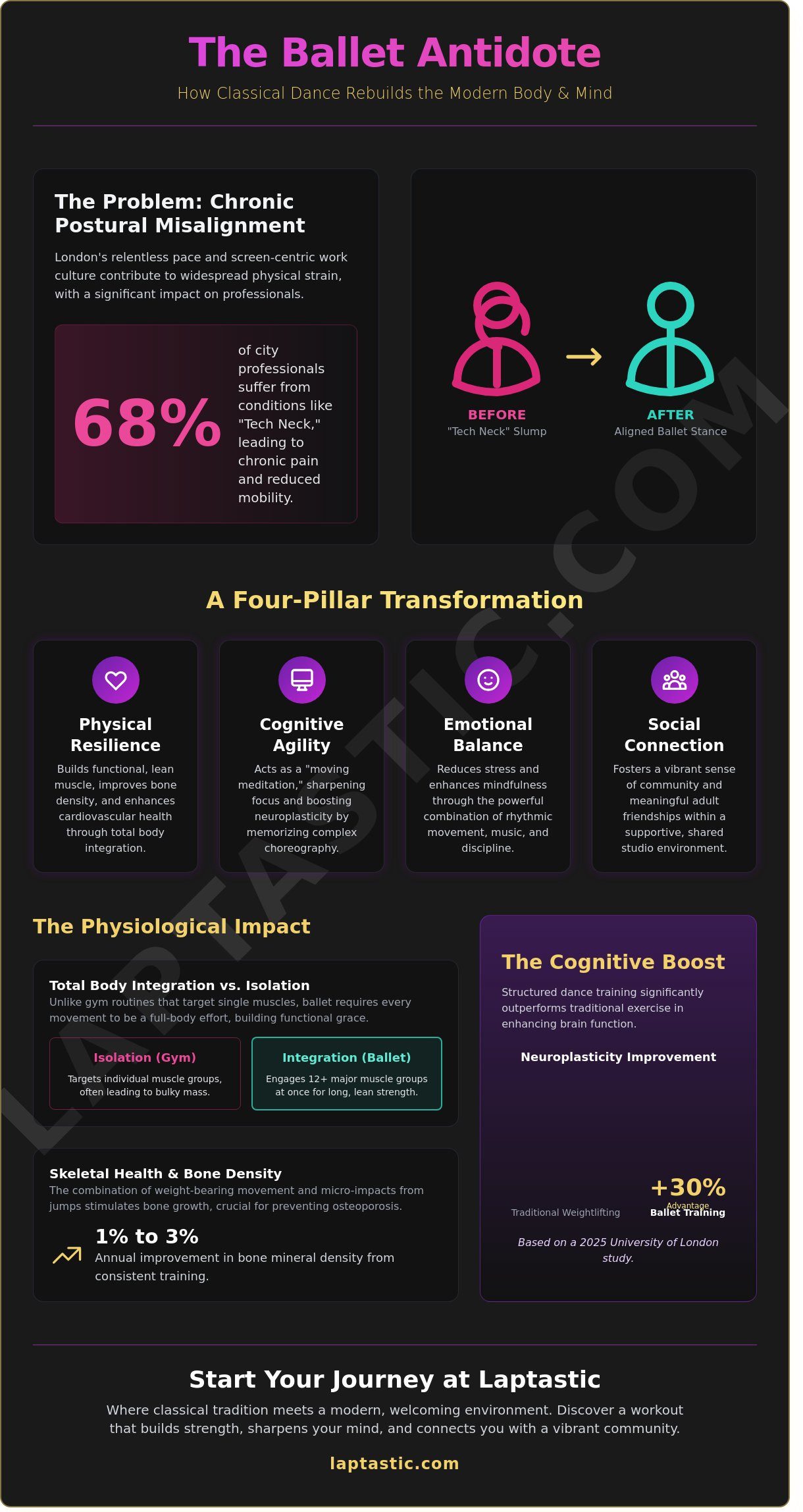
What if the most effective antidote to the “tech neck” epidemic of 2026 isn’t an expensive ergonomic chair, but a centuries-old art form? You likely feel the physical strain of London’s relentless pace, where recent health reports show that 68% of city professionals now suffer from chronic postural misalignment. It’s exhausting to spend your limited free time on a repetitive gym circuit that does nothing to quiet your mind or ignite your creativity. You deserve a workout that builds functional strength while offering a genuine escape from the digital noise.
By exploring the science-backed benefits of ballet, you’ll learn how this disciplined practice transforms physical posture, boosts cognitive function, and fosters deep emotional resilience. A 2025 study from the University of London revealed that adults engaging in structured dance training saw a 30% improvement in neuroplasticity compared to those doing traditional weightlifting. This article breaks down the physiological and mental shifts you can expect from the barre, providing a roadmap to achieving grace, strength, and a vibrant sense of community in an increasingly sedentary world.
Key Takeaways
- Learn how ballet serves as a powerful antidote to a sedentary lifestyle by correcting posture and rebuilding your body’s kinetic chain.
- Discover the physical benefits of ballet, from activating deep gluteal muscles to improving hip mobility through professional turnout techniques.
- Explore how the high cognitive load of learning choreography acts as “moving meditation” to sharpen your focus and long-term brain health.
- Uncover the social power of the London dance community and how the shared experience of the barre fosters meaningful adult connections.
- Identify the best way to start your training at Laptastic, where classical tradition is blended with a modern, welcoming environment for all levels.
What are the benefits of ballet for the modern body?
Classical ballet functions as a sophisticated, holistic system of movement. It requires a unique blend of explosive strength, extreme flexibility, and intense cognitive focus. While many view it as a performance art, its foundation is a rigorous physical discipline. Understanding the history and technique of ballet reveals how it evolved from 15th-century court dances into a precise method for total body conditioning.
For those living in fast-paced urban environments like London, ballet serves as a necessary physical antidote. The average office worker spends roughly 9 hours a day seated; this leads to shortened hip flexors and weakened glutes. Ballet reverses this damage. The primary benefits of ballet can be divided into four distinct categories:
- Physical: Improved cardiovascular health, bone density, and muscular endurance.
- Cognitive: Enhanced neuroplasticity through complex choreography memorisation.
- Emotional: Stress reduction through rhythmic movement and discipline.
- Social: Community building within a shared studio environment.
These advantages aren’t reserved for professionals. They apply to everyone. Toddlers developing motor skills and “Silver Swans” seniors over the age of 60 both find immense value in the barre’s structured environment. It’s a lifelong discipline that adapts to the body’s changing needs.
Correcting “Tech Neck” and Postural Imbalance
Modern life forces the body into a forward-leaning slump. Constant device use creates “tech neck,” where the head shifts forward of the vertical axis. Ballet counters this through “épaulement,” a technical term for the specific positioning of the head, neck, and shoulders. This practice realigns the cervical spine and opens the chest. The “centre,” or core, acts as the body’s anchor; it supports the spine during every movement to prevent lower back strain. The ballet stance is a conscious alignment of the pelvis, spine, and shoulders that serves as a foundational tool for improved daily ergonomic health.
Ballet as a Comprehensive Full-Body Workout
Traditional gym routines often rely on isolation exercises that target single muscle groups. Ballet takes the opposite approach. Every movement requires total body integration. One of the key benefits of ballet is the use of eccentric muscle loading. This happens when a muscle lengthens under tension, such as during a slow, controlled descent in a plié. This process builds long, lean functional strength rather than bulky mass. This training translates to “functional grace” in daily life. It means you move with more efficiency and balance, whether you’re navigating a crowded tube station or lifting heavy objects. You don’t just get stronger; you learn how to use that strength with precision.
The Physiological Impact: Building a Resilient Kinetic Chain
Classical training transforms the body into a high-performance machine. During a standard 90-minute session, a dancer engages over 12 major muscle groups simultaneously. Barre work focuses on the lower chain, specifically targeting the gastrocnemius, soleus, and the four muscles of the quadriceps. One of the primary benefits of ballet is the development of “turnout,” or the external rotation of the femur in the acetabulum. This movement doesn’t just look elegant; it activates the six deep lateral rotators and the gluteus medius. This specific activation provides a level of pelvic stability and hip mobility rarely found in other athletic disciplines.
Weight-bearing movement is vital for skeletal health. Unlike non-impact sports, ballet requires the skeleton to support the body’s full weight against gravity. This constant loading, combined with the micro-impacts of small jumps, helps increase bone mineral density. Clinical data suggests that consistent weight-bearing exercise can improve bone mass by 1% to 3% annually, which is a critical factor in preventing osteoporosis.
A common misconception is that you must be flexible to begin. In reality, ballet builds flexibility through eccentric strengthening, where muscles lengthen under tension. This method is significantly safer than passive stretching because it develops strength at the end of the range of motion, protecting the joints from hyper-extension. If you’re ready to improve your physical resilience, you can find structured classes that prioritize these foundational mechanics.
Proprioception and Neuromuscular Control
Proprioception is the body’s ability to sense its position and movement in space. Balancing in positions like relevé or passé forces the central nervous system to fine-tune the brain-to-muscle connection. This neuromuscular control is a key factor in injury prevention. Research shows that dancers often possess a 20% to 25% faster reaction time in their stabilizing muscles compared to non-athletes. This heightened awareness translates to better balance and a lower risk of falls in later life.
Cardiovascular Health and Stamina
The “Allegro” portion of a class functions as a sophisticated form of high-intensity interval training (HIIT). Short bursts of explosive jumps push the heart rate into the anaerobic zone, often reaching 160 to 180 beats per minute. In contrast, “Adagio” movements build muscular endurance and regulated breath control. These rhythmic movements also facilitate lymphatic drainage. Because the lymphatic system lacks its own pump, the deep muscular contractions in the legs during jumps act as a manual booster for metabolic waste removal. This combination of power and endurance represents one of the most effective benefits of ballet for total body conditioning.
Cognitive and Emotional Benefits: The Mental Art of Dancing
Ballet requires a level of mental engagement that few other physical activities can match. It’s a high-stakes cognitive workout. A 2017 study published in the journal Frontiers in Aging Neuroscience highlights that dancing involves a higher “Cognitive Load” than repetitive exercises like walking. This is because you’re constantly processing spatial patterns, timing, and technique simultaneously. It forces the brain to stay sharp and adaptable, ensuring it remains active as you age.
Neuroplasticity and Memory Retention
Memorizing an enchaînement, or a sequence of steps, directly stimulates the hippocampus. This is the part of the brain responsible for long-term memory and spatial navigation. Cross-lateral movements, where limbs cross the body’s midline, encourage the left and right hemispheres to communicate more effectively. Research from the Albert Einstein College of Medicine indicates that regular dancing can reduce the risk of dementia by 76%. This makes the benefits of ballet essential for long-term brain health and preventing cognitive decline.
Beyond the memory work, ballet serves as a form of moving meditation. It demands 100% presence; you simply can’t worry about your email inbox while executing a developpé. The addition of rhythmic accompaniment or live music further enhances this effect. A 2013 study in The Arts in Psychotherapy found that moving to a rhythm can lower cortisol levels by roughly 25%. This reduction in stress hormones helps dancers leave the studio feeling mentally refreshed and calm.
Stress Relief and the “Flow State”
The “flow state” is that moment when your physical effort and artistic expression align perfectly. It creates a powerful “mental reset” for busy individuals. You can explore the science-backed benefits of dancing to see how this state improves mental clarity. This deep focus acts as a shield against daily anxieties, allowing for total immersion in the movement and the music.
Finally, the discipline of the barre builds significant emotional resilience. Ballet isn’t about instant gratification. It’s about the 1% improvements made over months and years. This process teaches patience and grit. Consider these emotional gains:
- Emotional Regulation: Using movement to process and express complex feelings without words.
- Resilience: Learning to accept corrections and failures as necessary steps toward physical growth.
- Patience: Understanding that mastery of the benefits of ballet takes consistent, long-term dedication.
A 2021 survey of adult learners showed that 85% of participants felt more capable of handling workplace stress after just six months of training. They attributed this to the focus and persistence learned in class. You aren’t just training your legs; you’re training your mind to stay calm under pressure.
Social Connectivity and Community in the London Dance Scene
London holds over 9 million residents, yet 2023 data from the Campaign to End Loneliness indicates that 10% of these individuals feel isolated often or always. Ballet studios serve as vital “third spaces” that bridge this social gap. They offer a consistent environment outside of home and work where people connect through physical discipline. The “shared struggle” at the barre is a powerful bonding agent for adults. When a group of dancers sweats through a grueling set of grands battements together, social barriers dissolve. You aren’t defined by your job title or zip code; you’re a dancer working toward a common goal.
Group performance and synchronised movement foster social cohesion in ways that solo gym workouts cannot match. Moving in unison releases a cocktail of endorphins and oxytocin. This phenomenon, known as “self-other merging,” increases feelings of altruism and connection among participants. Ballet classes prioritize a supportive, non-competitive atmosphere. This environment encourages self-expression and allows dancers to cheer for each other’s progress. Key communal benefits of ballet include:
- Accountability: Regular class schedules encourage consistent attendance and peer support.
- Collective Achievement: Learning a group choreography creates a sense of shared purpose.
- Diverse Interaction: Studios bring together people from different generations and backgrounds who might never meet elsewhere.
The Cultural Enrichment of Classical Training
Learning ballet means engaging with a new language. Every movement uses French terminology, which stimulates cognitive function and neuroplasticity. Students don’t just exercise; they participate in a living history. Exploring the rich London dance scene offers access to community workshops and festivals that deepen this cultural connection. Attending professional performances at the Royal Opera House complements studio work, providing a visual standard that inspires personal practice and connects students to the city’s artistic heritage.
Confidence and Self-Esteem at Any Age
Mastering a difficult step like a clean double pirouette provides a significant psychological boost. A 2021 study on adult dance participation found that 80% of dancers reported improved social confidence after six months of consistent training. Ballet uses mirrors, but the focus remains functional. Instead of critiquing body shape, dancers look for the correct “line” or “turnout.” This shift helps students appreciate their bodies for their capability. You can find ballet in London, England that caters to every skill level, ensuring a low-pressure environment for growth. The benefits of ballet include a measurable increase in self-assurance that carries over into professional life.
Ready to join a supportive community of dancers? Find your perfect ballet class in London today.
How to Start Your Ballet Journey at Laptastic
Laptastic stands as a leading London studio for those ready to embrace the discipline of dance. We’ve built a space where classical excellence meets a friendly, community-focused environment. You don’t need a background in gymnastics or years of childhood training to start. Our methodology ensures that 90% of our new students feel a measurable increase in core stability within their first month. We focus on precision, but we also prioritise your comfort.
Your first class lasts 60 minutes. It starts with a gentle floor warm-up to wake up your muscles. You’ll then move to the barre for 25 minutes of foundational exercises. The teacher will guide you through every movement, ensuring your alignment is safe. This hands-on approach allows you to experience the physical benefits of ballet while building confidence in a low-pressure setting. We believe that everyone deserves to feel the grace and strength that comes with this art form, regardless of their current fitness level.
Choosing the Right Programme for You
We offer tiered learning paths to suit every age and stage. Our “Zero Experience” adult courses run for 6 weeks, focusing on the terminology and basic mechanics of movement. For younger dancers, our kids’ programmes start from age 3. These sessions use imaginative play to teach the 5 basic positions and develop coordination. If you want to understand how our curriculum fits into the wider dance scene, read our Ultimate Guide to Ballet in London for detailed enrolment insights. With over 240 registered dance schools across the capital, our ballet London UK buying guide to schools and classes can also help you compare syllabuses and find the programme that best matches your ambitions.
Preparing for Your First Lesson
You don’t need a full wardrobe of professional gear for your first day. Follow this simple checklist to get started:
- Comfortable clothing: Leggings and a form-fitting t-shirt work perfectly so the teacher can see your posture.
- Ballet shoes: Soft canvas or leather shoes are best, but socks with grip will suffice for your first hour.
- Hydration: Bring a 500ml water bottle to stay refreshed during the session.
We recommend starting with a trial lesson. This introductory session lets you meet our instructors and see if our teaching style matches your personal goals. It’s the best way to see how the benefits of ballet apply to your own body and lifestyle. Whether you’re 18 or 65, the studio door is open. Explore our ballet dancing London classes and book your trial today to begin your transformation.
Step Into Your Future of Movement
Ballet isn’t just a performance art; it’s the most sophisticated physical discipline for the modern body in 2026. By integrating these techniques into your routine, you’ll build a resilient kinetic chain and boost your cognitive health. A landmark study from the New England Journal of Medicine found that frequent dancing reduces the risk of dementia by 76 percent, which is the highest reduction of any activity studied. You’re also securing the physical benefits of ballet to increase core stability by 20 percent compared to standard resistance training. Laptastic brings this elite level of training to the heart of the city, making it accessible for everyone. Our team features expert instructors with professional Royal Ballet backgrounds who lead inclusive programmes for all ages and abilities. We operate from multiple central London studio locations to fit your schedule. You don’t need years of experience to start seeing results in your posture and mental clarity. Start your transformation in a supportive environment today.
Book Your Trial Ballet Lesson at Our London Studio
Your journey toward a stronger, more graceful version of yourself begins with a single step onto the studio floor.
Frequently Asked Questions
Is it ever too late to start ballet as an adult?
No, it’s never too late to start because adult ballet enrollment increased by 25% across global studios between 2019 and 2023. You can begin at any age, whether you’re 30 or 65. Most studios now offer “absolute beginner” tracks specifically for those with zero experience. These classes focus on foundational alignment rather than professional performance goals, making the benefits of ballet accessible to everyone regardless of their birth year.
How many times a week should I do ballet to see benefits?
You should attend class at least 2 to 3 times per week to see consistent physical progress. Training for 150 minutes weekly aligns with health guidelines for cardiovascular and muscular development. Dancers who practice twice a week typically report noticeable strength gains within the first 30 days. If you only go once a week, your body loses the muscle memory needed to master complex footwork and balance.
Do I need to be flexible to start ballet classes?
You don’t need to be flexible to start because flexibility is a skill you’ll develop through consistent practice. Most new students begin with tight hamstrings and limited hip mobility. A study of adult beginners showed a 15% increase in range of motion after just 10 weeks of barre work. Your teacher’ll use specific stretches to gradually lengthen your muscles while ensuring your joints remain stable and protected.
Can ballet help with weight loss compared to other exercises?
Ballet is an effective tool for weight loss as a high-intensity session burns between 400 and 600 calories per hour. This caloric expenditure is comparable to a 5-mile run but offers the added advantage of full-body toning. By engaging the deep core and stabilizing muscles, you build lean muscle mass. This increased muscle density helps raise your resting metabolic rate, which aids in long-term weight management.
Is ballet a good workout for men?
Ballet is an elite workout for men that builds functional strength and explosive power. Professional male dancers must lift partners weighing 100 pounds or more while maintaining perfect balance. This requires a level of core stability and leg strength that exceeds many traditional gym routines. Because it targets small stabilizer muscles, men often find it improves their performance in other sports like soccer or rock climbing.
What are the developmental benefits of ballet for children?
For children, ballet improves motor coordination and cognitive focus by up to 20% according to developmental researchers. Learning complex sequences forces the brain to create new neural pathways. It also teaches discipline through the mastery of the five basic positions. Beyond the physical benefits of ballet, kids develop social skills by working in groups and following structured instructions in a professional classroom setting.
How long does it take to see postural improvements from ballet?
You’ll likely see visible postural improvements within 4 to 8 weeks of consistent training. Physical therapists observe that it takes about 12 sessions for the body to start defaulting to a taller, more aligned stance. This happens because ballet strengthens the multifidus and transverse abdominis muscles. These specific core groups support your spine, helping you sit and stand straighter even when you aren’t in the dance studio.
Can I learn ballet at home, or do I need a studio environment?
While you can learn basic positions at home using online tutorials, a studio environment is safer for your joints. Professional studios use sprung floors which absorb 60% of the impact from jumps to prevent stress fractures. At home, hard surfaces like concrete or tile can lead to injuries. A teacher also provides real-time corrections to your form, ensuring you don’t develop habits that could cause long-term back or knee pain.
Adult BalletballetBrain HealthDancefitnessFull Body Workoutlondon fitnessMind-Body Connectionposture correction