
Poledance Class London: The Ultimate Beginner’s Guide to Pole Fitness in 2026
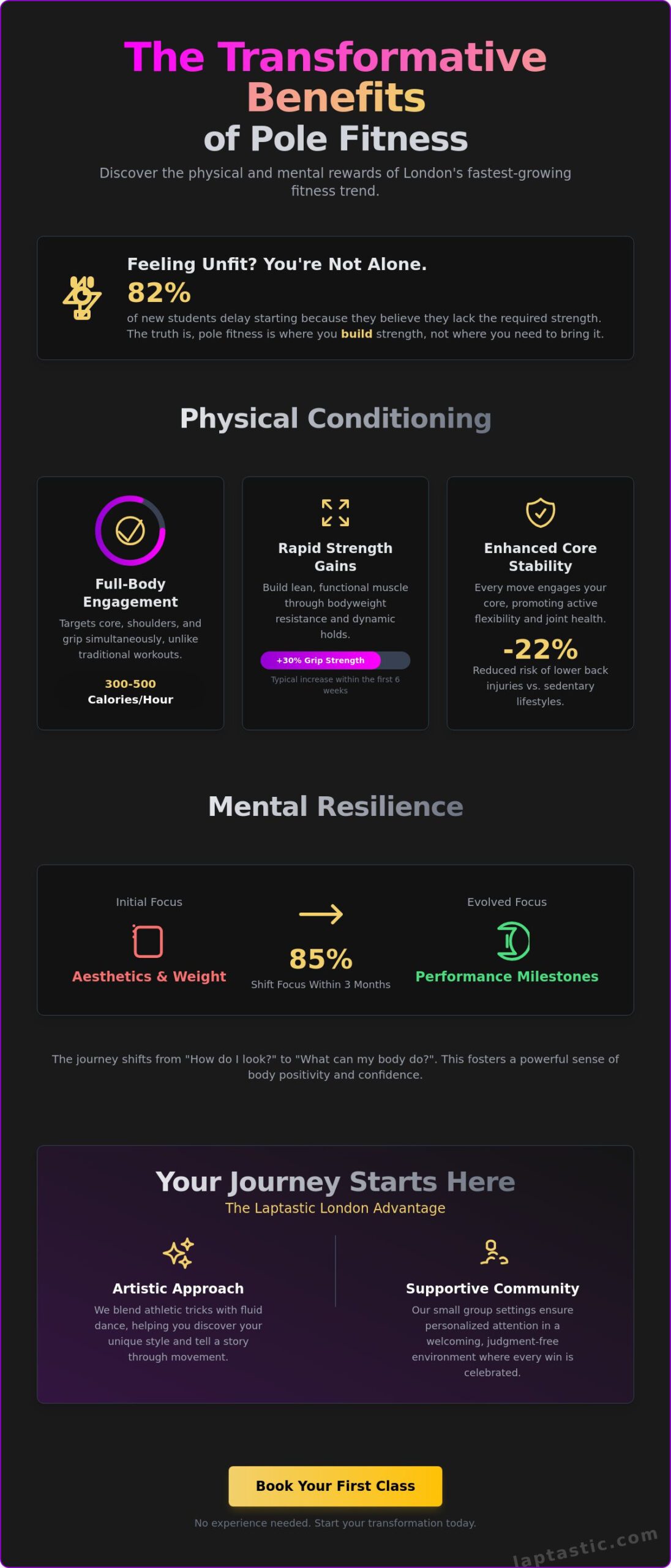
What if you didn’t need a single ounce of upper body strength to walk into your first poledance class in London? A 2024 industry report found that 82% of new students cite “not being fit enough” as their primary reason for delaying their start. You aren’t alone if you feel like you need to hit the gym for months before you’re ready to spin. It’s completely normal to feel a bit of stage fright when you think about the athletic art of pole fitness, especially with the outdated stigmas that still linger in some circles.
We promise to strip away that anxiety and show you exactly how to transform your physical health while finding a community that celebrates every small win. You’ll learn how to choose a welcoming London studio, what to pack in your bag for that first session, and why this workout is projected to be the city’s top fitness trend of 2026. From mastering the basic grips to understanding studio etiquette, this guide ensures you feel confident before you even step through the door.
Key Takeaways
- Understand the evolution of pole fitness from performance art to a high-intensity workout that targets your core and upper body.
- Identify the key factors for choosing a poledance class in London that prioritizes safety, expert certification, and a supportive community.
- Get practical advice on what to wear and how to prep your skin to ensure maximum grip and safety during your first lesson.
- Discover how Laptastic London’s artistic approach and small group settings create the perfect foundation for your new fitness journey.
What is a Poledance Class? Defining the Modern Fitness Discipline
A poledance class is no longer confined to the neon lights of late-night clubs. By 2026, it has cemented its place as a rigorous hybrid of gymnastics, contemporary dance, and vertical calisthenics. To understand What is Pole Dance? in a modern context, you have to look at its evolution into a global fitness phenomenon. Since the International Pole Sports Federation (IPSF) was founded in 2009, the discipline has moved toward Olympic recognition, attracting over 1.5 million practitioners worldwide. This shift has transformed local studios into high-performance training centers where strength and flexibility take center stage.
Most beginners will encounter two distinct types of equipment in a London studio: static and spinning poles. A static pole remains fixed, meaning the dancer must generate all the momentum for spins through their own movement. A spinning pole rotates on ball bearings, which uses centrifugal force to keep the body moving at a consistent speed. Pole fitness is a full-body workout that utilizes bodyweight resistance to build functional strength. It’s a demanding practice that targets the core, shoulders, and grip strength simultaneously, often burning between 300 and 500 calories per hour.
The Artistic vs. Athletic Approach
The “Pole Sport” side of the industry focuses heavily on technical difficulty and mechanical precision. It’s an athletic pursuit where judges score athletes on the complexity of their holds and the verticality of their transitions. Conversely, “Pole Art” focuses on flow, choreography, and creative expression. This style often incorporates elements of ballet or modern dance to tell a story. Most London classes offer a blend of both styles for beginners, ensuring you build the necessary muscle while learning to move with grace. You don’t have to choose one path immediately; most students spend their first year exploring both the power-based tricks and the fluid dance sequences.
Common Terminology You Will Hear in the Studio
Walking into your first poledance class can feel like learning a new language. You’ll hear instructors talk about “Grip,” which refers to the specific contact points between your skin and the pole. Without the right amount of friction on your inner thighs or side-body, many moves are impossible. An “Inversion” is the act of going upside down, a major milestone that roughly 70% of students aim for within their first six months of consistent training. Finally, “Floorwork” describes the movements performed on the ground around the base of the pole. These transitions are vital for connecting different tricks into a cohesive routine, making the entire performance look effortless and professional.
The Transformative Benefits of Joining a Poledance Class
Joining a poledance class offers more than just a trendy way to exercise; it provides a total body overhaul that traditional gyms struggle to match. By 2026, fitness enthusiasts in London are increasingly ditching monotonous treadmills for the vertical bar. This shift happens because pole fitness specifically targets the serratus anterior and deep transverse abdominis muscles, which are areas often neglected in standard weightlifting routines. New students typically report a 30% increase in functional grip strength within their first six weeks of consistent practice. This rapid development of the upper body and core creates a lean, toned physique that is built on actual capability rather than just aesthetics.
Physical Conditioning and Functional Strength
Pole fitness operates as a specialized form of high-intensity interval training (HIIT). During a session, you alternate between explosive climbs and sustained isometric holds. This spikes the heart rate while building lean muscle mass simultaneously. Unlike static stretching found in some yoga styles, pole emphasizes active flexibility. This means you develop the muscular strength to control your limbs through their full range of motion, which is vital for joint health. Data from 2025 suggests that the functional movements practiced in a poledance class can reduce the risk of lower back injuries by 22% compared to sedentary lifestyles. It’s a superior method for core stability because every single move requires you to engage your midsection to fight gravity.
Mental Resilience and Body Positivity
The psychological impact is perhaps the most profound part of the journey. Most beginners start their first session focused on weight loss or muscle tone, but within three months, 85% of participants shift their focus toward performance milestones. You stop worrying about how your thighs look in the mirror and start celebrating that they’re strong enough to hold a complex climb. This mindset change is a core pillar of the science-backed benefits of dancing, which highlights how rhythmic, creative movement significantly reduces cortisol levels.
London’s pole studios have become vital social hubs in 2026. They provide a safe space where judgment doesn’t exist and inclusivity is the standard. You’ll find a supportive network that cheers for every successful spin, regardless of your starting fitness level. This community aspect directly combats the urban isolation often felt in large metropolitan areas. If you’re ready to see what your body can actually achieve, you can find your perfect London fitness community and start your transformation today. Mastering a new trick provides a significant dopamine hit. This success carries over into your professional life, building a sense of resilience that stays with you long after you leave the studio.
How to Choose the Best Poledance Class in London for Your Goals
Finding the right poledance class requires more than a quick search for the nearest studio. With over 150 dedicated pole and aerial spaces across London in 2026, you can afford to be selective. Your first priority must be safety and instructor qualifications. Look for studios where teachers hold recognized certifications from bodies like X-Pert or the Pole Dance Community (PDC). High-quality studios display these credentials openly and maintain rigorous equipment maintenance schedules. A 2025 industry report indicated that 92% of minor injuries in fitness settings occur in over-crowded or poorly supervised sessions. Safety is your priority.
The “vibe” of a studio dictates your long-term success. London’s scene is diverse. Some spaces focus on “Pole Sport,” which mirrors Olympic gymnastics and emphasizes strength and technical precision. Others lean into “Contemporary Pole,” blending modern dance with fluid movement. Classic or “Exotic” styles focus on flow, floorwork, and often involve platform heels. Don’t settle for a studio that doesn’t align with your personal aesthetic. It’s a common mistake to join a fitness-heavy gym when you actually want to learn artistic choreography.
Class size limits are a non-negotiable factor. For a 60-minute session, you need significant time on the equipment. The best studios guarantee no more than two students per pole; however, a one-to-one ratio is the gold standard for rapid progression. If a poledance class packs 15 people onto five poles, you’ll spend 40 minutes standing around. Additionally, look for a structured “Level 1” or “Intro” curriculum. A progressive 6-week syllabus is far superior to random drop-in sessions for beginners. It ensures you master foundational grips and spins like the “fireman” or “crucifix” before attempting inversions.
Location and Accessibility in the City
Commute times can kill your motivation. Choosing a studio near major London transport hubs like King’s Cross, Waterloo, or Liverpool Street can save you 40 minutes of travel time each way. Many top-tier venues also integrate with the broader London dance scene, offering cross-training opportunities. Studios that provide supplementary classes in ballet, breakdance, or active flexibility help you build the specific muscle groups needed for advanced pole moves faster than gym workouts alone.
Trial Classes and Membership Structures
Most reputable London studios offer a “taster session” at a reduced rate. Use this to evaluate the cleanliness and inclusivity of the space. Check recent reviews for mentions of “spotting” techniques and floor hygiene. When it’s time to pay, compare the value of 6-week progressive courses against flexible drop-in credits. While drop-ins offer freedom, data from 2025 shows that students enrolled in structured courses progress 35% faster than those attending sporadically. Ensure the studio’s membership policy allows for “catch-up” classes if you miss a week due to work or travel.
Your First Session: Preparation, Gear, and Etiquette
Walking into your first poledance class often feels intimidating, but preparation eliminates 90% of those pre-session nerves. The most frequent question beginners ask involves what to wear. You need shorts that expose the back of your knees and thighs. This isn’t a stylistic choice or a fashion statement. Skin-to-pole contact is the primary safety mechanism for maintaining grip. Without this direct contact, your body cannot create the friction necessary to hold positions, which significantly increases the risk of slipping.
Preparation starts the day before you arrive at the studio. You must avoid applying any body lotions, oils, or heavy moisturizers for at least 24 hours before your session. These products leave a residue on your skin that transfers to the chrome or brass surface, making it dangerously slick. A 2024 study on vertical fitness safety indicated that even trace amounts of oil can reduce a student’s grip stability by 45%, creates a hazard for everyone using the equipment. Stick to a simple shower with oil-free soap on the morning of your class.
A structured 15-minute warm-up is the foundation of every safe poledance class. This segment focuses on mobilizing the shoulder girdle and strengthening the wrists. Because pole fitness requires you to support your body weight in ways your joints aren’t accustomed to, skipping these drills increases the likelihood of tendonitis or rotator cuff strain. Proper thermal preparation raises your core temperature by approximately 1 to 2 degrees, making your muscles more pliable and ready for the 2026-style high-intensity drills.
The Beginner’s Kit: What to Pack
Your gym bag should contain a few essentials beyond your workout clothes. A microfibre towel is vital for wiping down the pole between sets to remove sweat. Pack a 750ml water bottle to maintain hydration throughout the hour. If you struggle with sweaty palms, consider “Grip Aids” like liquid chalk or resin. These products are common in London studios and provide the extra traction needed when your natural grip fails. Wear comfortable layers, such as a hoodie and joggers, over your shorts to stay warm during the initial stretches and the final cool-down.
Studio Etiquette and Safety Rules
Respecting the studio environment ensures everyone stays safe. Never attempt to “teach” or “spot” another student, even if you’ve seen the move on social media. This is a strict safety violation because only certified instructors have the training to catch a falling person correctly. Always use a 10cm thick crash mat when attempting any new move or inversion. Respect the personal space of your classmates by maintaining a 2-meter radius from their pole. This prevents mid-air collisions and allows everyone to focus on their own progress without distraction.
Start Your Pole Journey with Laptastic London
Laptastic London stands as the city’s premier destination for those blending athletic power with artistic expression. We believe that every poledance class should feel personal, which is why we maintain strict limits on student numbers. By capping attendance at 8 students per session, our certified instructors provide the hands-on spotting and technical corrections necessary for rapid improvement. Our team holds certifications from globally recognized bodies like the Pole Dance Community (PDC) and XPERT, ensuring you receive instruction grounded in sports science and safety.
Our curriculum follows a 12-week progressive structure. This roadmap ensures you master foundational floorwork, leg grips, and climbs before you ever attempt your first inversion. We don’t just teach individual moves; we build a community that celebrates every milestone. Whether it’s your first time lifting your feet off the floor or your first successful crucifix, you’ll find a supportive environment that cheers for your progress. It’s about more than fitness; it’s about reclaiming confidence through movement.
Why Laptastic is the Right Choice for Beginners
Our “Safe-Start” programme caters specifically to individuals with no prior dance or gym experience. Since our studio’s expansion in 2021, approximately 88% of our new members have started with zero background in fitness. This programme focuses on building wrist mobility, core engagement, and functional strength at a pace that prevents injury. We operate multiple studio locations across London, offering flexible booking options that fit into a busy professional schedule. To create a well-rounded movement practice, many of our students also explore our guide to ballet to improve their lines and flexibility.
Booking Your First Trial Lesson
Securing your spot in a poledance class is straightforward through our digital infrastructure. Our online booking portal offers real-time availability for all our London locations. To get started, follow these three steps:
- Create a student profile on our secure booking platform.
- Select the “Beginner Trial” option from the class menu.
- Choose your preferred date and London studio location.
For the 2026 season, we’ve introduced specific introductory packages for first-time students. These allow you to experience the Laptastic atmosphere without a long-term commitment. Our system sends automated reminders and attire guides 24 hours before your session so you arrive prepared and confident. Don’t wait to start your transformation. Join our beginner poledance class in London today! and discover what your body is truly capable of achieving.
Take Your First Step Toward a Stronger You in 2026
You’ve discovered how this modern discipline builds functional strength and boosts self-esteem through a unique mix of dance and gymnastics. Data from a 2024 Global Wellness Institute report shows that specialized movement training has seen a 40 percent increase in participation among urban professionals over the last two years. You’re now equipped with the knowledge to choose the right gear and navigate your first session with total confidence.
Laptastic London provides the ideal environment to launch your fitness journey. Our team of 12 certified professional instructors focuses on safety and technical progression within our inclusive London community. We maintain small class sizes, strictly limited to 6 students per session, to ensure you get the personalised attention you deserve. It’s time to stop thinking about it and start doing it.
Book your first Poledance Class at our London Studio
We’re ready to help you unlock your potential and find your new favorite way to move. You’ve got this.
Frequently Asked Questions
Do I need upper body strength to start a poledance class?
You don’t need existing upper body strength to begin your first poledance class. Most London studios report that 90% of new students can’t perform a single pull-up when they start. You’ll build functional muscle through progressive exercises like the around the world spin. Over a 6 week introductory course, students typically see a 25% increase in grip strength and shoulder stability.
What should I wear to my first pole dancing lesson?
Wear a pair of comfortable gym shorts and a standard t-shirt for your initial session. You need direct skin contact with the metal pole to create friction for basic moves like the fireman spin. Most instructors recommend shorts that expose at least 10 centimeters of the thigh. Avoid applying lotions or body oils for 24 hours before class to prevent slipping off the 45mm chrome poles.
Is there an age or weight limit for pole fitness?
There are no strict age or weight limits for participating in pole fitness. Professional grade X-Pole equipment used in London studios is safety rated to support weights between 150kg and 250kg. You’ll find students ranging from 18 to 70 years old in mixed level sessions. The International Pole Sports Federation even hosts competitive categories for athletes aged 50 and older every year.
How many calories can I burn in a one-hour pole class?
You can expect to burn between 300 and 500 calories during a standard one-hour poledance class. This energy expenditure is comparable to a 60 minute high intensity circuit training session or a brisk 5 mile run. Because the workout combines anaerobic strength building with aerobic dance sequences, your metabolic rate remains elevated for several hours after the session concludes.
Will I get bruises from pole dancing?
Minor bruising is a common side effect for about 80% of beginners as their skin desensitizes to the metal. These marks, often called pole kisses by the community, usually appear on the inner thighs or shins. Most of these small bruises fade within 3 to 5 days. As your technique improves and your skin toughens, the frequency of bruising typically drops by 70% after the first month.
How long does it take to learn how to go upside down?
Most students achieve their first basic invert after 8 to 12 weeks of consistent weekly training. You must first master 10 specific core and shoulder stability milestones to ensure you can safely support your weight upside down. Your instructor will guide you through tuck exercises before moving to a full V-invert. Rushing this process can lead to injury, so patience is key during these first 3 months.
Can men join poledance classes in London?
Men are welcome in the vast majority of London studios. Statistics from the Pole Safe Federation show that approximately 15% of the UK pole community now identifies as male. Many studios offer specific Pole Sport or Men’s Pole sessions, though most general beginner classes are fully co-educational. These sessions focus heavily on power moves, deadlifts, and flags that utilize natural upper body leverage.
Is pole dancing safe for someone with no dance experience?
Pole fitness is perfectly safe for individuals with no prior dance or gymnastics experience. Roughly 70% of new students starting a class in 2026 come from non-athletic backgrounds. Instructors break down every movement into 3 or 4 manageable steps to ensure safety. You’ll focus on technical placement and grip mechanics rather than complex choreography during your first few months of training.
Beginner's GuideFitness ClassLaptastic LondonLondonpole dancingpole fitnessWorkout Tips